Topic Intelligence
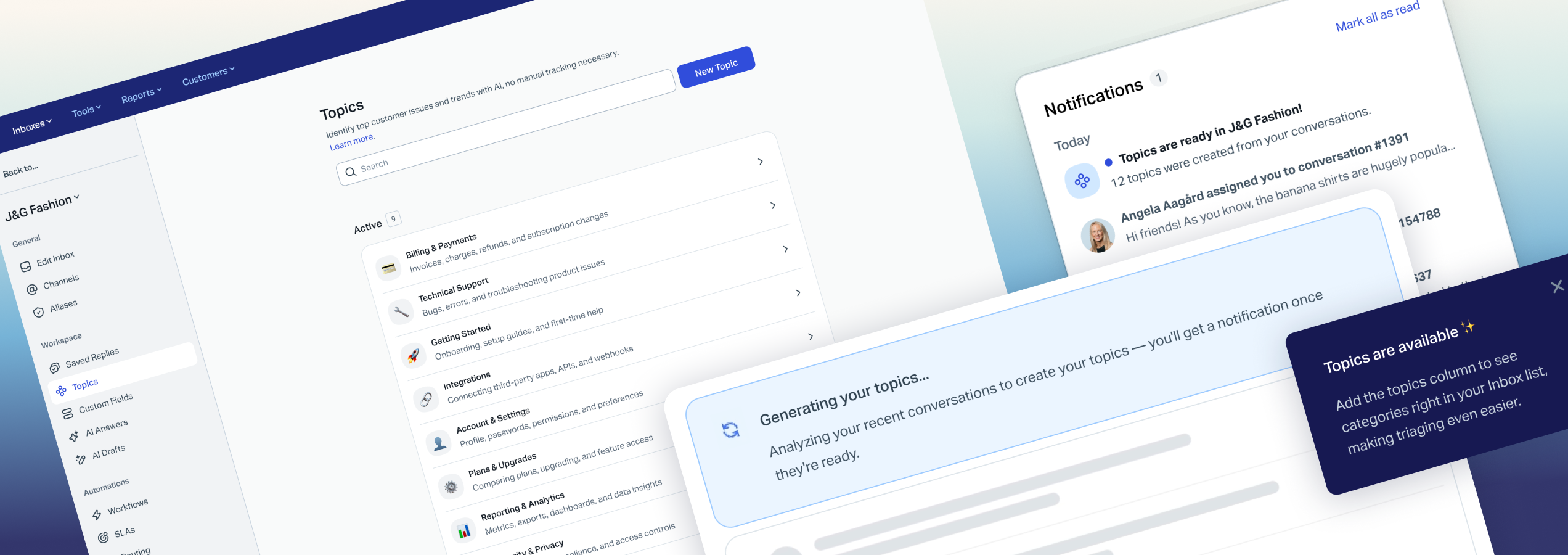
Turning support conversations into structured, usable data
At Help Scout, I helped shape Topic Intelligence to help teams uncover customer needs, identify recurring issues, and spot emerging trends in their support conversations. Using AI to classify conversations automatically, we turned those interactions into structured data teams could use across the product.
Project highlights
- 2.4M+ conversations classified
- 19% of eligible accounts adopted Topic Intelligence in its first three months
- 30 days of historical conversation data available in reports from the start
Role & Contribution
0→1 product, AI system, and interaction design, shaping how topics are generated, managed, and used across the product.
The Problem
Valuable signals were buried in conversations
Teams relied on manual tagging to organize support conversations and identify recurring issues. This made it harder to maintain consistent categorization and understand trends across customer interactions.
AI offered an opportunity to automate classification, but generating labels alone wasn’t enough. Topics needed to be relevant to each customer, manageable over time, and useful beyond the inbox.
More than an AI feature
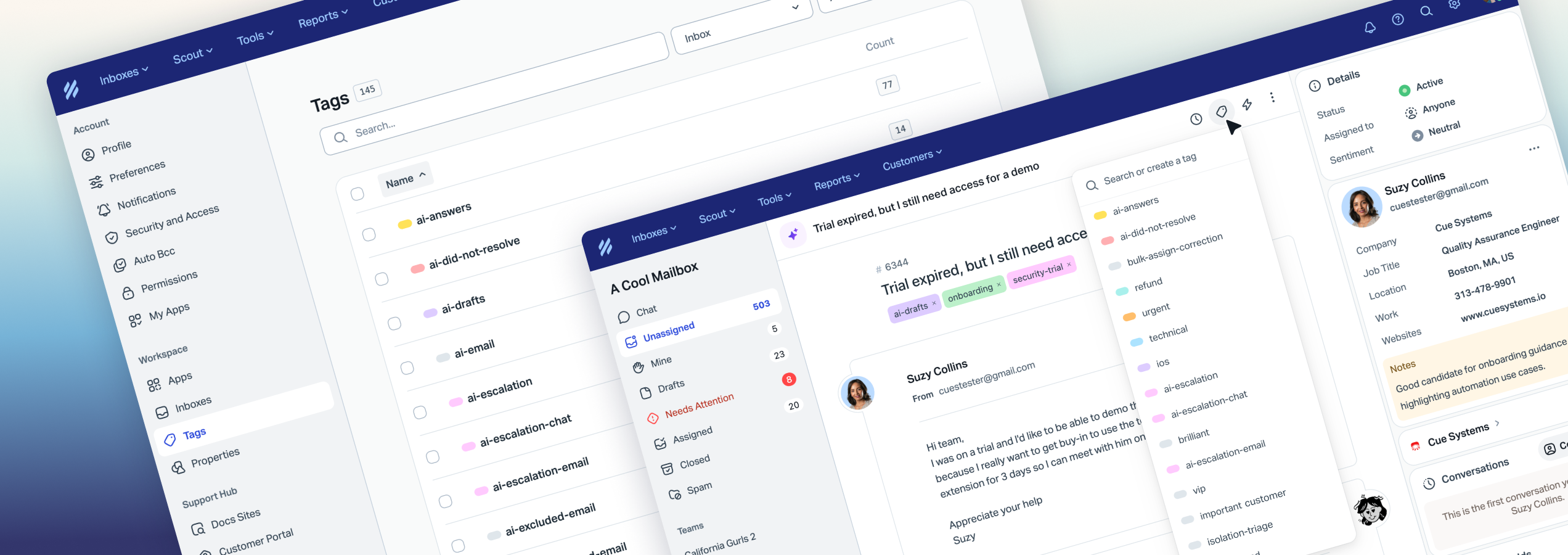
I approached Topic Intelligence as a broader product capability, not just a way to automatically label conversations. For the data to be useful, we needed to consider how topics were generated, how customers could refine them, and how the resulting data could connect to other parts of the product.
Getting the initial topics right
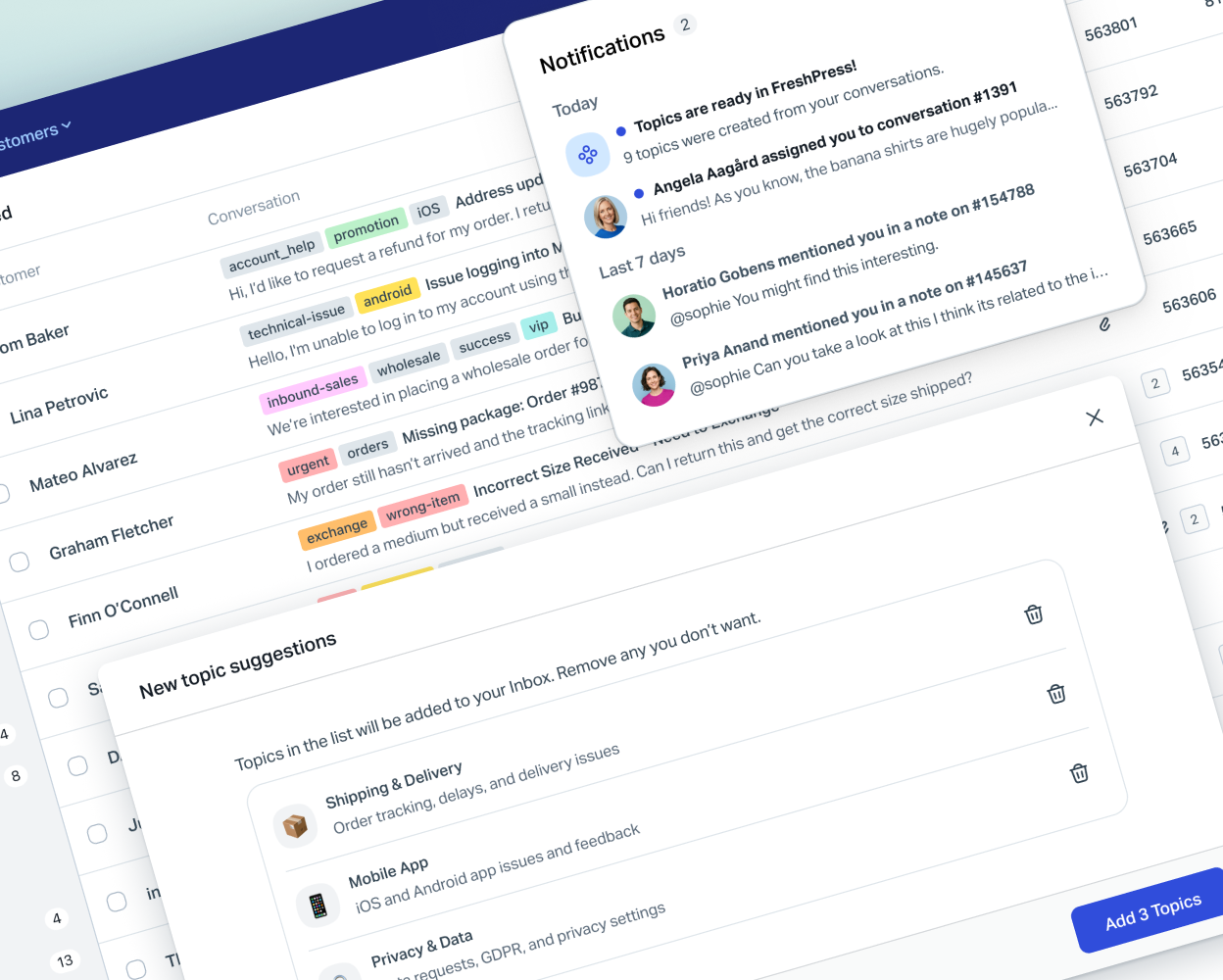
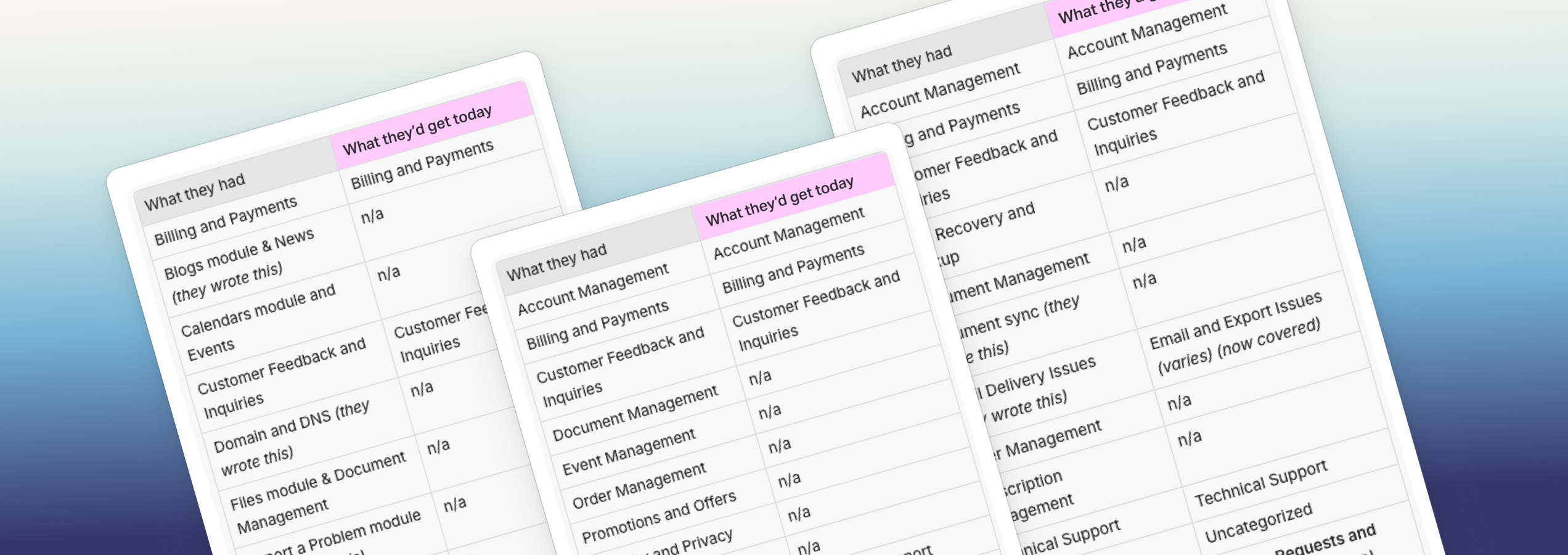
I pushed to revisit how initial topics were generated so they would be more relevant to each inbox. I also advocated for using other data available within the account to improve the quality of those initial results.
The goal was to give customers a useful starting point, reducing the effort needed to establish a classification system and helping build trust in the automated results.
Building a foundation for the broader product
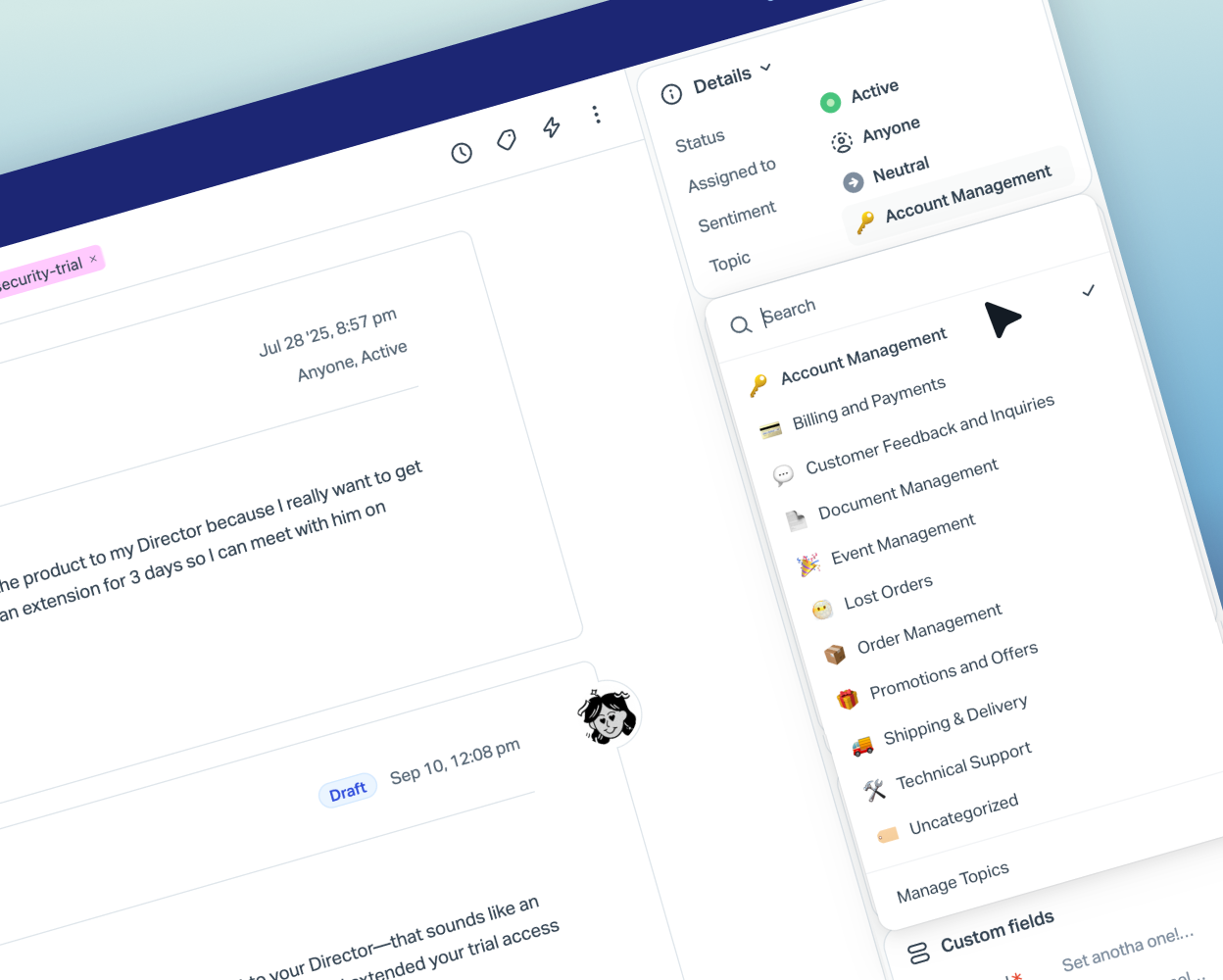
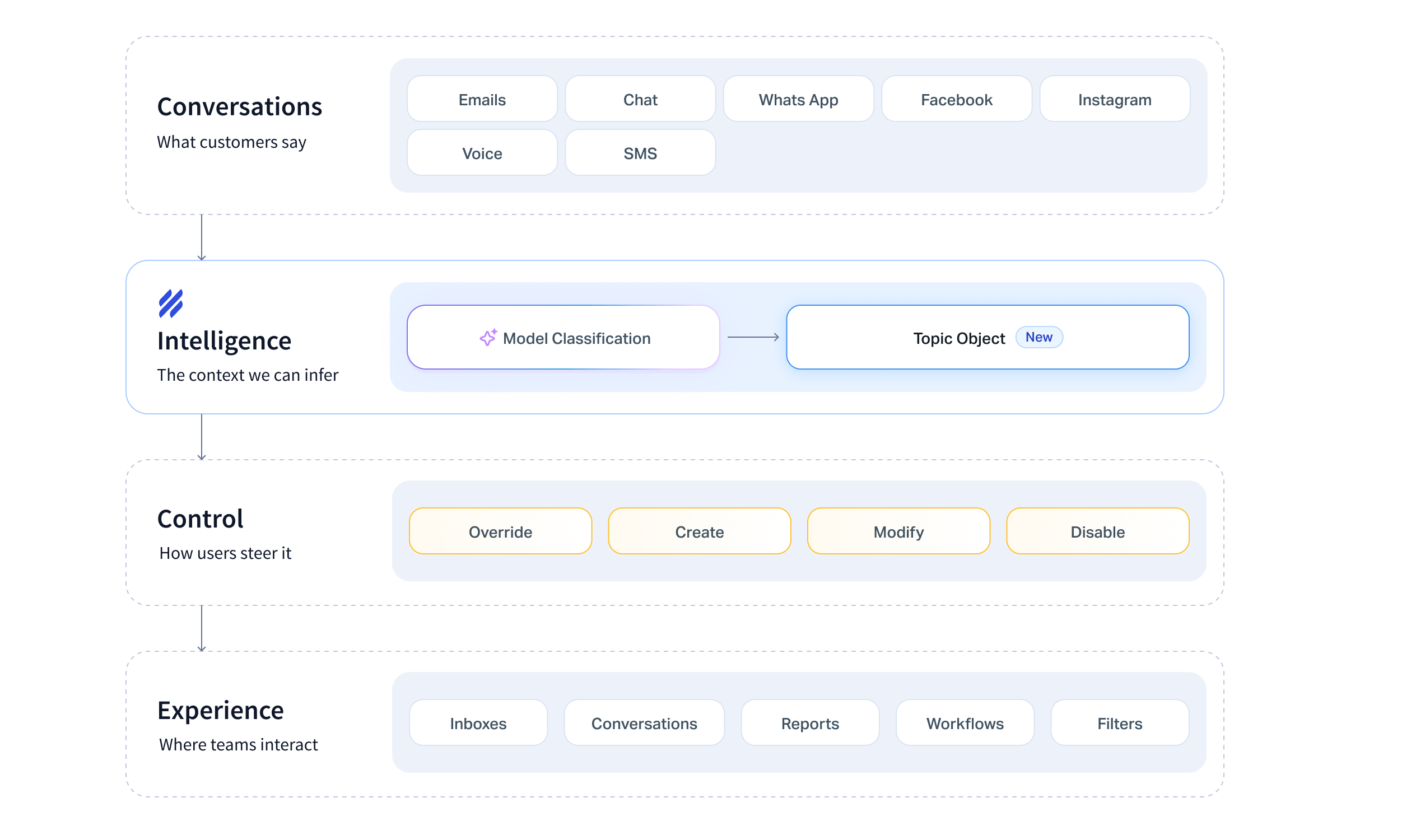
I worked closely with backend engineering to define how the topics service and underlying data model should support the broader product. Topics had its own service for managing topic definitions and classification, while each conversation’s topic was stored in the existing custom-field system.
That connection made topic data available across conversation views, filters, workflows, and reporting—not just in the classification experience.
Delivering value from day one
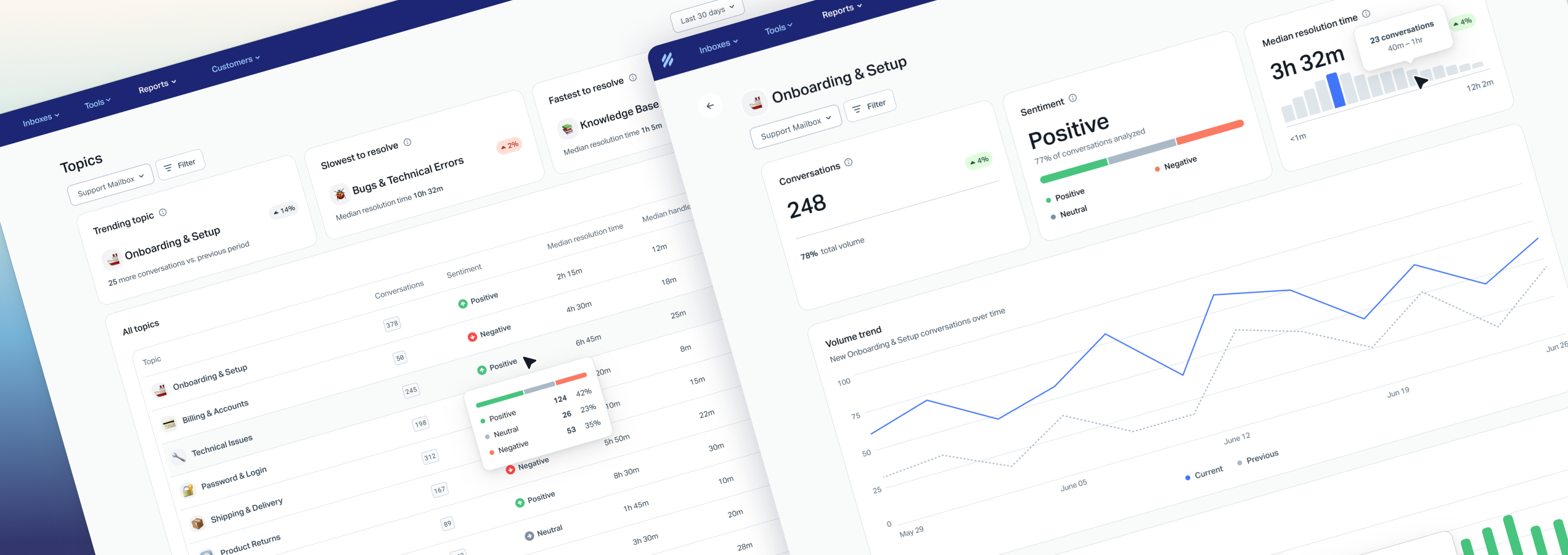
A 30-day historical backfill meant customers could explore topic trends in their reports as soon as they enabled Topics, without waiting for new conversations to come in.
In its first three months, 19% of eligible accounts adopted Topics. Customers also used topics to automatically route conversations to the right teams, giving them more time to focus on customer needs instead of manually sorting requests.
By far my favorite Help Scout feature in recent years.
